Noah Claypole
Noah Claypole is one of the most memorably contemptible minor characters in Charles Dickens's Oliver Twist — a charity boy who, having suffered mockery himself, vents his resentment on the still more helpless orphan Oliver, and whose later career as a sneak thief and police informer traces a downward arc that the novel treats with savage comedy rather than redemption.
Identity and Background
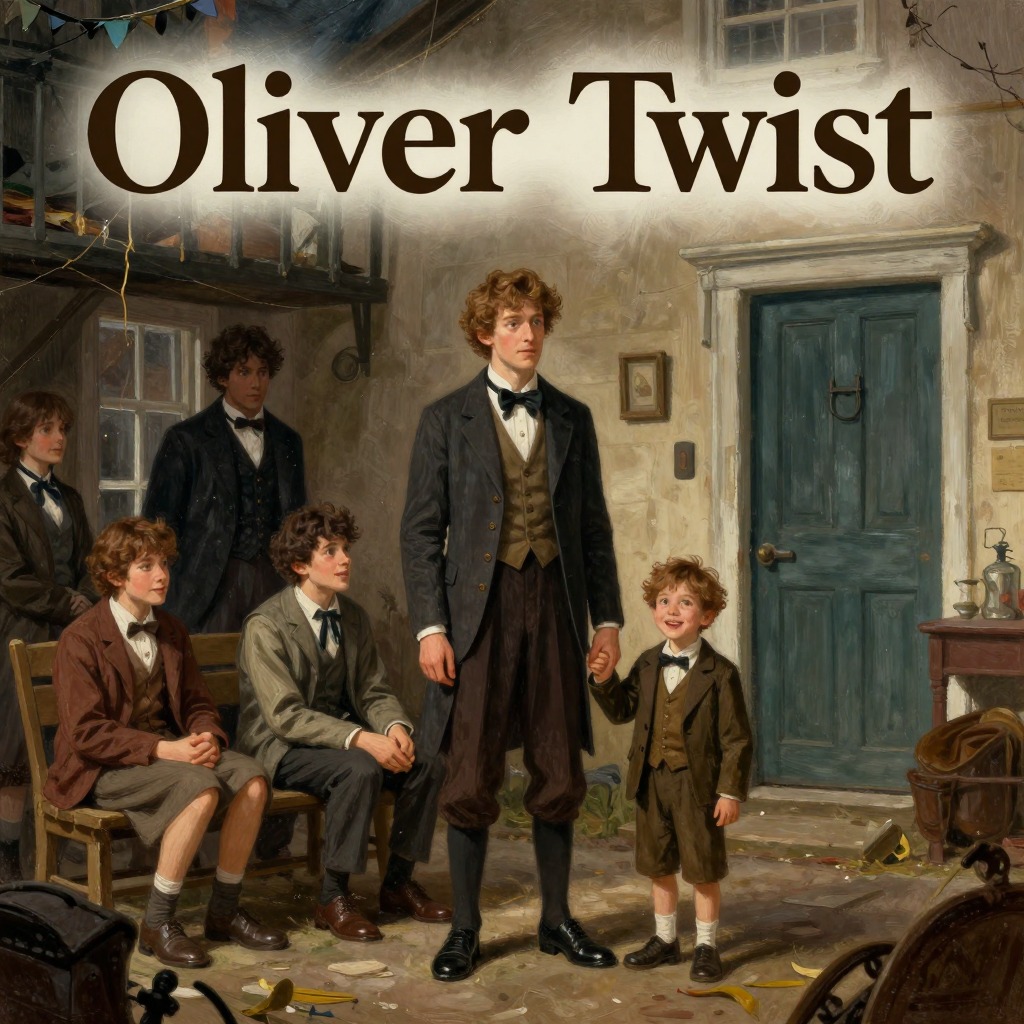
Noah Claypole is introduced as a large-headed, small-eyed, lumbering charity boy with a red nose and yellow smalls, who works for Mr. Sowerberry the undertaker. Unlike Oliver, he is not a workhouse orphan: his mother is a washerwoman and his father a drunken soldier discharged with a wooden leg and a daily pension of twopence-halfpenny. The shop-boys in the neighborhood have long taunted him with epithets like "leathers" and "charity," insults he has borne without reply. But when fortune places in his path a nameless orphan — Oliver Twist — Noah seizes the chance to retort on someone weaker with interest, a dynamic Dickens presents as a universal human tendency: "It shows us what a beautiful thing human nature may be made to be; and how impartially the same amiable qualities are developed in the finest lord and the dirtiest charity-boy."
Bullying Oliver and the Fight
Noah's cruelty toward Oliver is systematic and petty. He kicks Oliver on first meeting, calls him "Work'us," and taunts him about his mother. The climax comes when Noah, during a dinner alone with Oliver, deliberately provokes him by calling Oliver's dead mother "a regular right-down bad 'un." This insult to his mother's memory finally rouses Oliver's spirit: he seizes Noah by the throat, shakes him till his teeth chatter, and fells him with a single blow. Noah immediately screams for help, claiming Oliver is trying to murder him. When Mrs. Sowerberry and Charlotte arrive, they beat Oliver, and Noah joins in pommelling him from behind. Noah then runs to fetch Mr. Bumble, embellishing his injuries with theatrical writhing and claiming he has sustained severe internal damage. The gentleman in the white waistcoat gives Noah a penny and calls him "a good boy."
Flight to London and Transformation into Morris Bolter
After Oliver runs away, Noah and Charlotte rob Mr. Sowerberry's till and flee to London. Noah, displaying a cunning that contrasts with his earlier oafishness, deliberately takes the wrong road at first and then cuts across country to avoid pursuit. He carries the stolen money himself but has Charlotte carry the heavy bundle, calculating that if they are caught the money will be found on her, allowing him to claim innocence. In London, they take lodgings at the Three Cripples public-house, where Noah's boasts about wanting to join a criminal gang are overheard by Fagin through a secret pane of glass. Fagin recruits Noah, who adopts the alias "Morris Bolter" and presents Charlotte as "Mrs. Bolter." Fagin assigns him to the "kinchin lay" — robbing children sent on errands — which Noah finds perfectly suited to his cowardly and sneaking nature.
Role as Spy and Informer
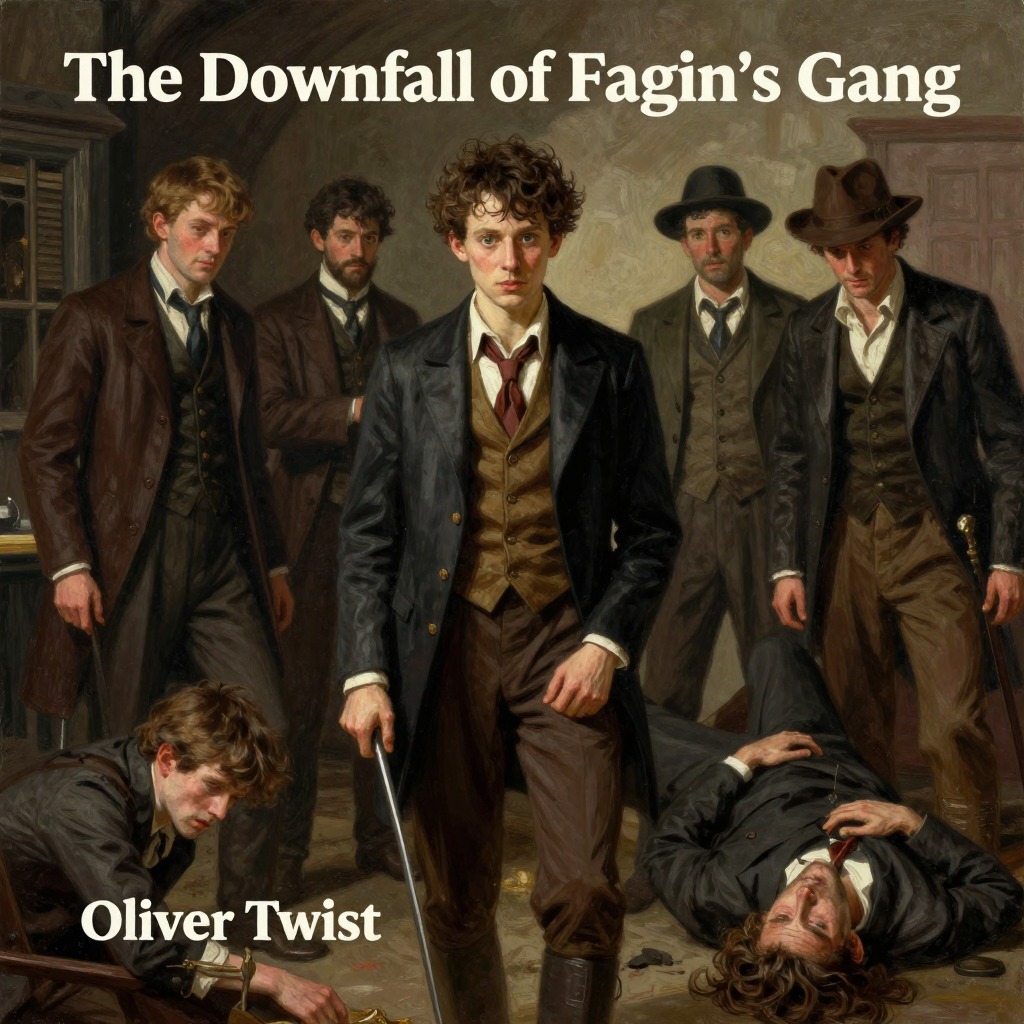
Fagin employs Noah to spy on Nancy, suspecting her of betraying the gang. Disguised as a countryman in a waggoner's frock and leather leggings, Noah follows Nancy to London Bridge on Sunday night and conceals himself on the stairs below the bridge, where he overhears her entire secret meeting with Mr. Brownlow and Rose Maylie. He reports every word to Fagin, including that Nancy drugged Sikes with laudanum to keep her appointment. This intelligence directly leads to Nancy's murder by Sikes. After Fagin's arrest, Noah turns approver against him, receiving a free pardon from the Crown. He then goes into business as a professional informer, a career Dickens describes with characteristic irony: his plan is to walk out with Charlotte during church time, have her faint at the doors of charitable publicans, accept brandy to revive her, and then lay an information the next day to pocket half the penalty. Sometimes Noah faints himself, but the result is the same.
Thematic Significance
Noah Claypole embodies the novel's critique of a social hierarchy in which those at the bottom, rather than uniting against their oppressors, turn on those still lower. His trajectory from bullied charity boy to bully, then to petty thief, and finally to professional informer, illustrates how the Poor Law system and its associated institutions produce not solidarity but a predatory scramble for advantage. Dickens denies Noah any moment of moral awakening or redemption; unlike Charley Bates, who reforms after Sikes's crime, Noah remains irredeemably self-interested, his final "respectable" occupation merely a legalized version of his earlier treachery. His marriage to Charlotte, whom he dominates and exploits, mirrors the Bumbles' relationship in its petty tyranny, and his alias "Morris Bolter" — suggesting both a bolt from danger and a bolt of cloth — captures his essential nature as a creature who always finds a way to slip through.